What mullein actually is (and what the seeds have to do with fish)
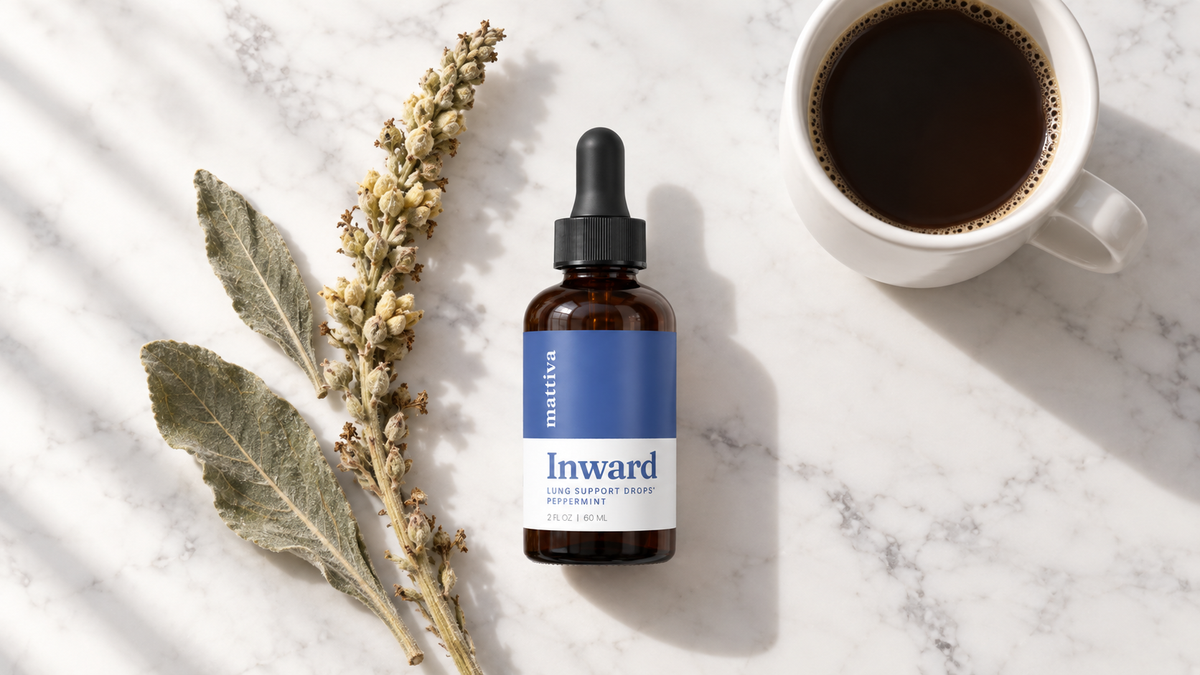
If you've ever driven past a gravel lot in July, you've seen mullein. It's the tall one — a fuzzy gray-green rosette that sends up a spike of small yellow flowers, sometimes six feet high, growing out of soil nothing else wants. Verbascum thapsus. It looks like a weed because it is one.
It's also one of the oldest respiratory herbs in the European tradition, and it's the first ingredient on the Inward label. So it's worth knowing what it actually does, what it doesn't, and where the evidence stands.
The tradition, on paper
Mullein isn't folklore in the loose sense. It has real regulatory paperwork behind it. The European Medicines Agency maintains a formal herbal monograph for mullein flower, recognizing its traditional use for soothing the throat in association with dry cough. Germany's Commission E — the panel that spent decades evaluating herbal medicines — approved mullein flower for catarrhs of the respiratory tract. ESCOP, the European herbal-science cooperative, lists it as a demulcent with mild expectorant properties.
"Demulcent" is the useful word. Mullein leaves and flowers are rich in mucilage — a slippery plant polysaccharide that coats and soothes irritated mucous membranes on contact. They also contain saponins, which herbalists have long credited with helping thin mucus, and a compound called verbascoside, which modern lab research has studied for antioxidant and inflammation-modulating activity.
What the modern evidence shows (and doesn't)
Here's the honest part, and we'd rather say it than have you find out elsewhere: there are no large controlled human trials of mullein tea, tincture, or capsules for breathing. The mechanistic research is real — verbascoside alone has a stack of recent lab studies behind it — but it's mostly test-tube and animal work. What mullein has is centuries of consistent traditional use, formal recognition by European regulators on the basis of that tradition, and a plausible mechanism.
That's a legitimate basis for a daily botanical. It is not the same as proof, and anyone who tells you mullein will fix, clear out, or repair anything is selling past the evidence.
About Mullein seeds
One genuinely useful thing to know: not all parts of the plant are equal. Mullein seeds contain compounds including rotenone — historically potent enough that crushed seeds were thrown into ponds to stun fish. Colonists reportedly brought the plant to Virginia partly for that purpose. The medicinal tradition, and every modern monograph, uses the flowers and leaves only. Seeds and roots stay out.
There's a smaller, homelier caution too: the plant's fuzzy hairs. Mullein tea made from raw leaf has to be strained through fine cloth, because the hairs irritate the mouth and throat. A properly made tincture like the one in Inward is filtered, so this is a tea problem, not a drops problem — but if you ever brew the plant yourself, strain it well.
Where Inward fits
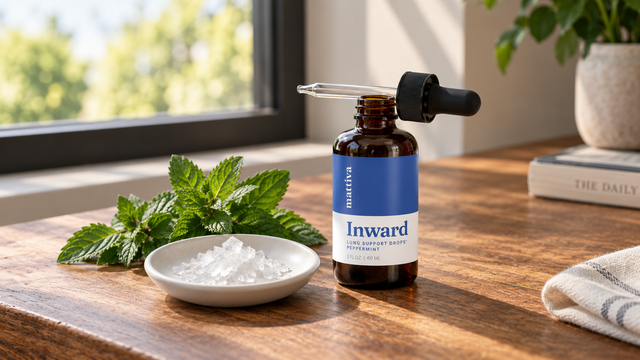
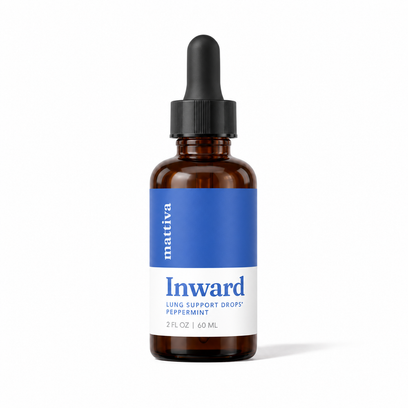
Inward puts mullein alongside peppermint, menthol, orange peel, and lavender in an MCT oil base — a daily oral tincture that supports normal respiratory function and comfortable breathing as part of a routine.* Forty drops in the morning, straight or in coffee. It's the tradition, done carefully, without the overclaiming.
*These statements have not been evaluated by the Food and Drug Administration. This product is not intended to diagnose, treat, cure, or prevent any disease.
*These statements have not been evaluated by the Food and Drug Administration. This product is not intended to diagnose, treat, cure, or prevent any disease.