The cool part: what menthol actually does when you breathe
Take a drop of anything mentholated and breathe in. That instant sense of space — cold, open, more room — is one of the most familiar sensations in the world. It's also one of the most interesting, because for the most part it isn't your airways changing at all. It's your nervous system.
A receptor that thinks mint is winter
Your body senses cold through a protein called TRPM8, a receptor that sits on nerve endings in your skin, your nose, and your upper airways. It fires when temperatures drop. It also fires, by a quirk of chemistry, when it meets menthol. Your brain can't tell the difference: menthol is read as coldness, which is why mint feels cool at room temperature.
Here's where it gets relevant to breathing. TRPM8 receptors are dense in the lining of the nose, and the sensation of cool air moving through the nose is a big part of how your brain judges airflow. When researchers measure it objectively, menthol generally doesn't change nasal resistance much — the pipe is the same size. But study after study finds people report airflow feeling clearer and breathing feeling easier. A pilot study published by the European Respiratory Society found that inhaled menthol's cooling effect reduced the sensation of breathing discomfort, working through TRPM8 and central perception rather than mechanics. Animal research at the same receptor found menthol applied to the upper airway calmed irritant-triggered cough reflexes.
Sensation isn't nothing
It's tempting to hear "it's perception, not mechanics" and file menthol under placebo. That's the wrong file. The perception of breathing is a real, measurable output of your nervous system — it's the thing you actually experience a hundred times an hour. A cooling signal that makes normal breathing feel easier and more comfortable is doing exactly what it appears to be doing. It's just doing it at the nerve, not the airway wall.
We think you should know the difference, because it's the difference between what we'll say and what we won't. We'll say menthol supports a cool, comfortable breathing sensation. We won't say it opens, expands, or clears anything, because that's not what the evidence shows.
The fine print worth knowing
Menthol is well studied and generally very safe at flavor-and-tincture doses. Two cautions belong in any honest write-up: mentholated products should never be applied near the face or nose of infants and very young children, and a small number of sensitive people find strong menthol irritating rather than soothing. Inward is formulated for adults, taken by mouth.
Where Inward fits
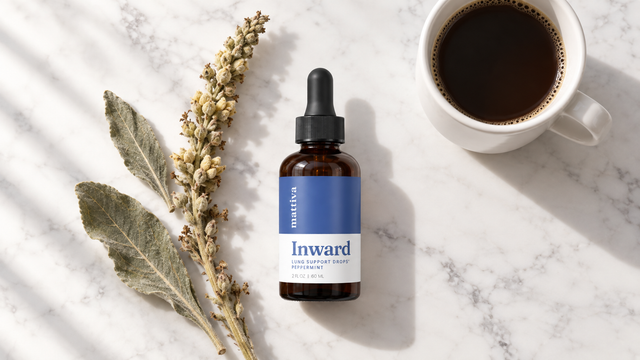
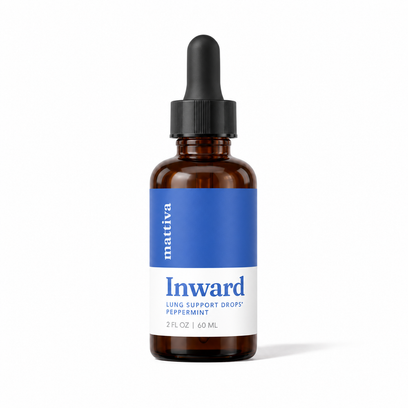
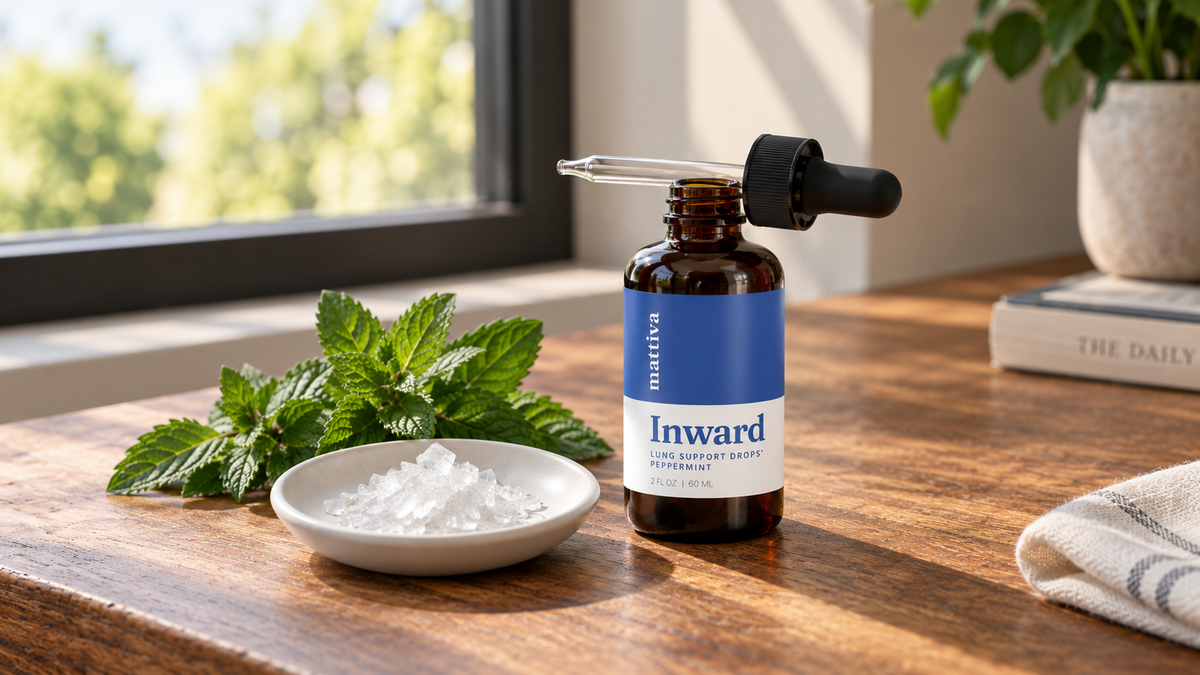
In Inward, menthol rides alongside peppermint — its natural source — plus mullein, orange peel, and lavender. Forty drops, once a day. Cool, faintly minty, not medicinal. It supports comfortable breathing as part of a daily routine,* and now you know exactly which part of you it's talking to.
*These statements have not been evaluated by the Food and Drug Administration. This product is not intended to diagnose, treat, cure, or prevent any disease.
*These statements have not been evaluated by the Food and Drug Administration. This product is not intended to diagnose, treat, cure, or prevent any disease.